

When language and communication are everywhere, but rarely discussed
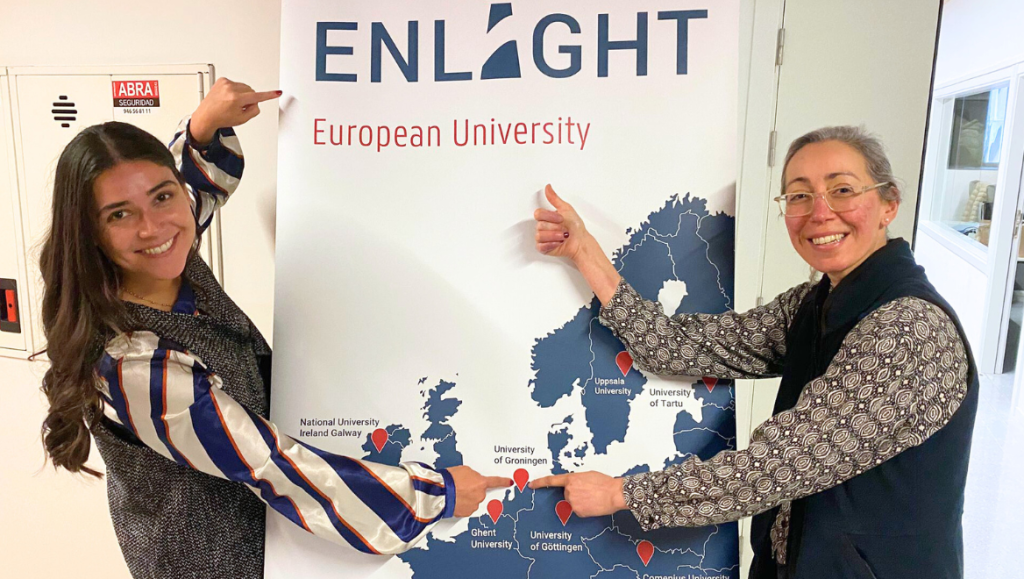
How do we make the power of words more visible? This is the question that has stayed with me since attending the winter school of the Enlight–DISRUPT project at the Bilbao School of Engineering (EHU) last week. And I will tell you why in the following article.
Text and pictures by Maria Pilar Uribe Silva
Cities have to become increasingly “smart”, resilient, and sustainable. Or at least, that is the promise to achieve climate neutrality by 2030 by the European Union. Across academic and policy discussions, new tools are presented to improve urban mobility, environmental quality, and everyday life. Apps like Marnoba invite citizens to actively report waste found on beaches and rivers, transforming individual observations into collective data. Other projects aim to connect decision-makers with technological tools, many of them based on systems such as digital twins and artificial intelligence (AI), designed to simulate urban dynamics, understand forest disturbances, and support data-driven decisions. The goal is clear: to build cities that are more efficient, more sustainable, and more responsive in environmental, social, economic and cultural terms.
But unfortunately, something essential is consistently missing from most of these conversations: language and communication.
Together with Dr. Marianna Markantoni, we witnessed this absence while attending the annual meeting of the Disrupt-Enlight project in Bilbao, Spain, from Tuesday 27 to Thursday 29 January 2026. This project is a network in the emerging field of Urban Digital Twins (UDTs) and their application to evidence-based urban management, resilient territories and sustainable development.
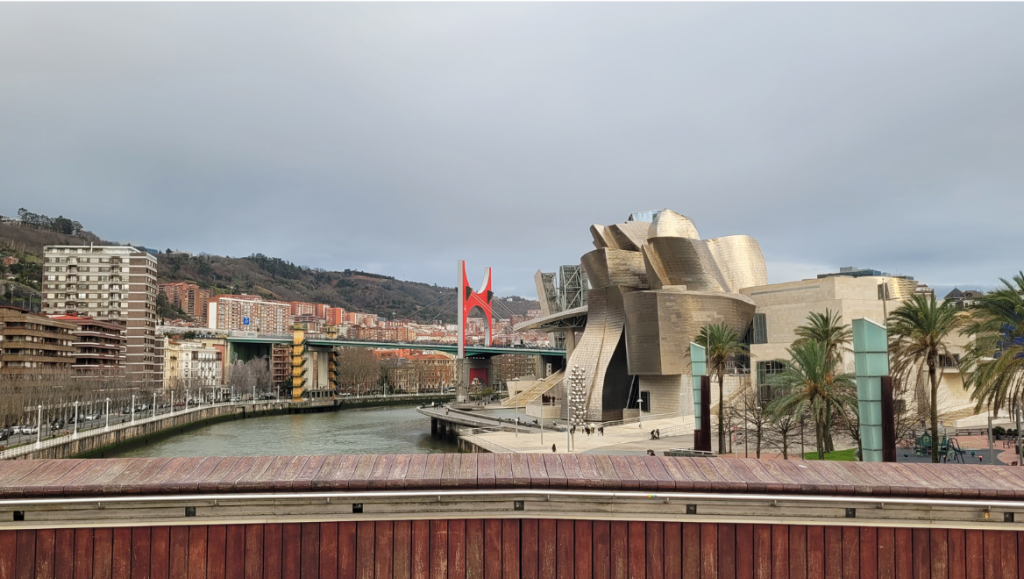
The meeting focused on Data for Urban Sustainability: Environment, Health and Society. The programme brought together PhD researchers, academics and practitioners working on urban mobility, pollution, digital twins, and data-driven decision-making. As in many similar forums, technical innovation dominated the discussion. Algorithms, models, infrastructures, and efficiency metrics took central stage. What was largely absent was a reflection on how these solutions are communicated, interpreted, and understood by people, by citizens.
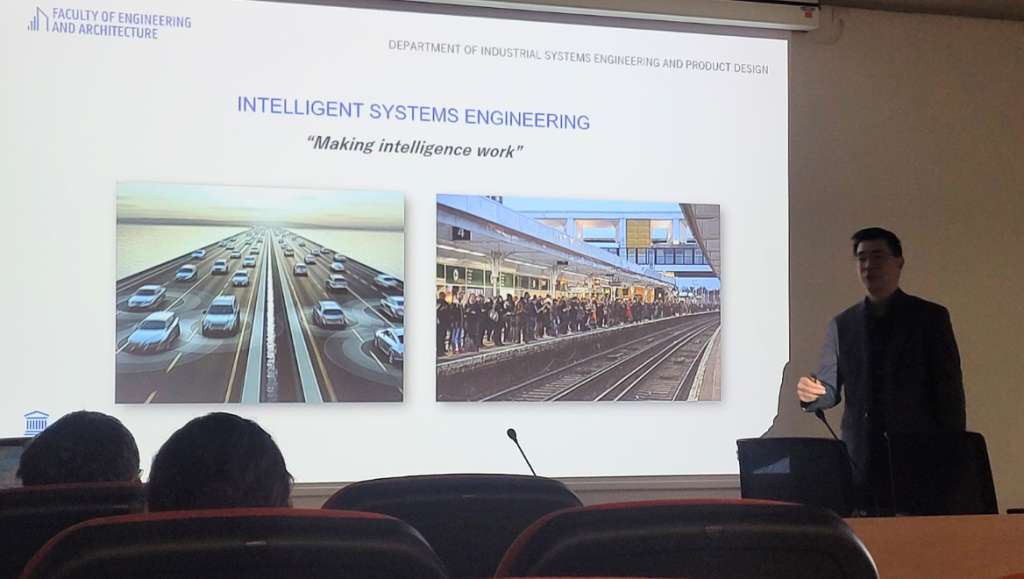
This project meeting was, without doubt, an excellent opportunity to exchange ideas and learn about key developments: how digital twins can play a fundamental role in understanding supply chains, processes, and decision-making; how the use of social data can support housing and energy planning; how remote work has reshaped the way people perceive mobility; how digital twins can inform decision-making for the 15-minute city (15mC); and how computational social sciences use technology to understand, detect, and propose solutions for society, while also reflecting on how these technologies, in turn, impact society.
And yet, despite all this innovation, the same gap remained visible: language and communication are everywhere, yet they are often treated as if they were self-evident, as something normal that we don’t need to pay attention to. As if they would simply “work” on their own. But they do not.
“Language and communication are everywhere, yet they are often treated as if they were self-evident, as something normal that we don’t need to pay attention to. As if they would simply “work” on their own. But they do not.”
Interdisciplinary conversations and networking
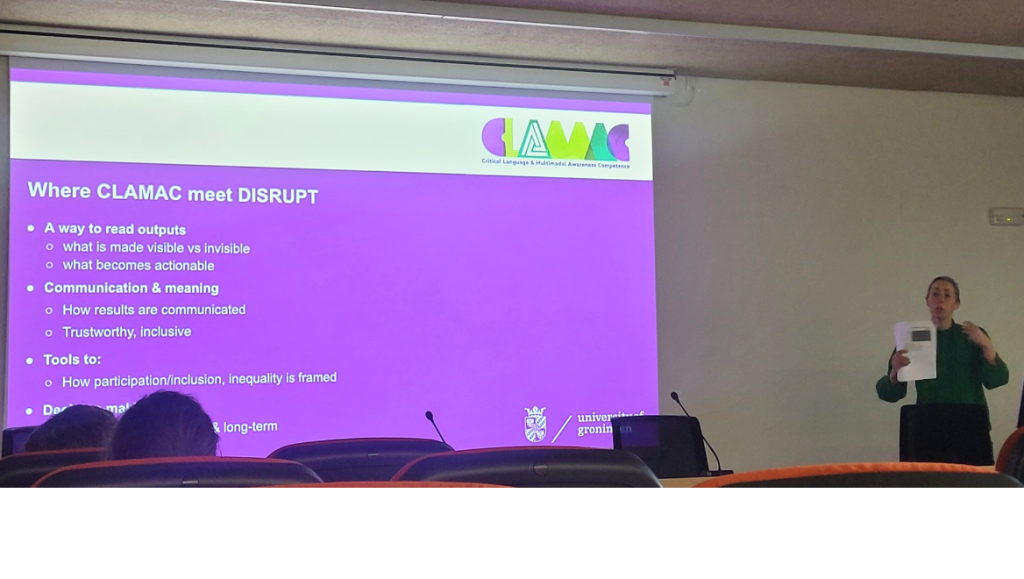
Marianna’s presentation of the CLAMAC project highlighted the crucial role language plays in the adoption and diffusion of sustainable and technological innovations within corporate and business communication. Even the most “intelligent” solution, tested and optimized in multiple ways, can fail if it is not communicated in an accessible, meaningful, and socially grounded way.
From another angle, my presentation on deceptive language in sustainability reporting, such as CSR and ESG reports, addressed the risks of taking language for granted. As I argued, a certain degree of deception is part of everyday human communication and social interaction. However, this cannot be accepted when companies communicate their sustainability performance. Sustainability reports and policy documents often rely on vague, abstract, or strategically ambiguous wording that creates an appearance of action without clear commitments.
Together, these perspectives point to the same conclusion: language and communication are not secondary layers added after technical solutions are designed. They are part of the solution itself.
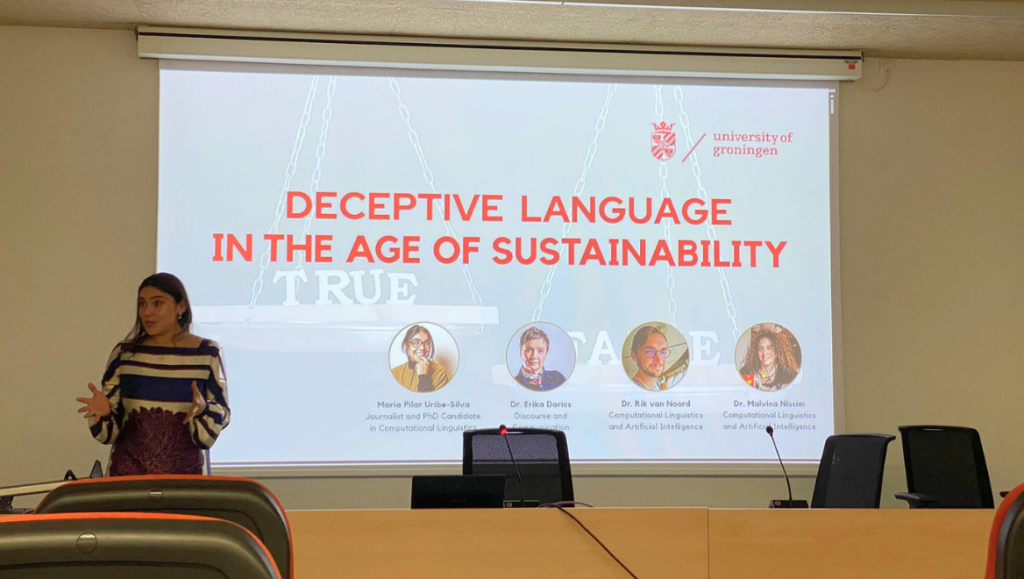
It became really clear to me that if we want “smart” and effective responses to grand societal challenges such as urban mobility, pollution, or the use of emerging technologies, we must pay attention not only to what we build, but also to how we talk about it.
Effective communication requires clarity, critical awareness, and an understanding of how language shapes perception, trust, and responsibility. I also believe it is a shared responsibility among researchers to continue thinking, building connections around Critical Language Awareness (CLA), and working to answer the question that remains: How do we make the power of words more visible?